
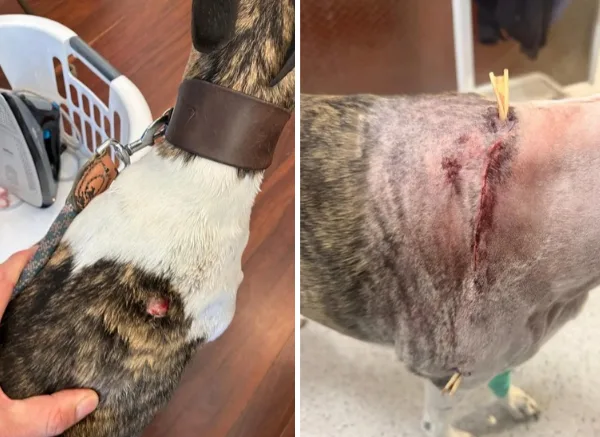
"the original bite wound was about 2 cm wide. The surgical incision needed to explore and treat it was approximately 10 to 15 cm long."
Dr Ari Ende
Mon / Fri 7:30 am - 7 pm | Sat 9 am - 4 pm
When Axel’s owner sent me a photograph of his bite wound, the question he asked was fairly straightforward: did he need medication?
Looking at the photo, you could be forgiven for thinking it wasn’t too serious. The wound was only about 2 cm wide. But I wasn’t comfortable judging the injury from what I could see on the surface.
I told his owner to take him to hospital. I suspected he would need more than medication, and unfortunately, that turned out to be the case.
Axel is a timid whippet who was nearly 10 years old when the incident happened. He was walking on a lead at a park near Clovelly when an off-lead golden retriever attacked and bit him.
We don’t know exactly what triggered the attack, but we know Axel was on a lead and the other dog wasn’t.
Initially, the visible injury looked relatively minor. There was a small wound where the teeth had broken the skin, but that photograph couldn’t tell us how much damage had occurred underneath.
And that’s the problem with dog bite wounds. What you see is often only the tip of the iceberg.
"the original bite wound was about 2 cm wide. The surgical incision needed to explore and treat it was approximately 10 to 15 cm long."
Dr Ari Ende
At the hospital, the area needed to be surgically opened and explored to assess the damage.
What initially looked like a small bite wound turned out to involve extensive muscle bruising and tissue damage. The surgical team had to remove damaged tissue and thoroughly flush the area, including pockets created beneath the skin by the bite.
A drain was also left in place to allow fluid to escape. Axel needed antibiotics and pain relief, and the drain had to be removed a few days later.
To put the extent of the injury into perspective, the original bite wound was about 2 cm wide. The surgical incision required to explore and treat it was approximately 10-15 cm long.
That’s quite a difference.
A dog’s teeth can do considerable damage beneath the skin, even when they leave only a small puncture. The force of the bite can crush and tear tissue, while bacteria from the mouth can be introduced deep into the wound.
In some cases, the skin can close over a puncture while the underlying tissue remains damaged or contaminated.
Not every dog bite requires surgery, but the size of the visible wound is not a reliable way to make that decision.
This is why I advised Axel’s owner to go straight to hospital rather than simply prescribing antibiotics. Medication alone cannot remove damaged tissue or clean out a deep pocket left by a bite.
Now, there’s another part of Axel’s story that I think is worth talking about.
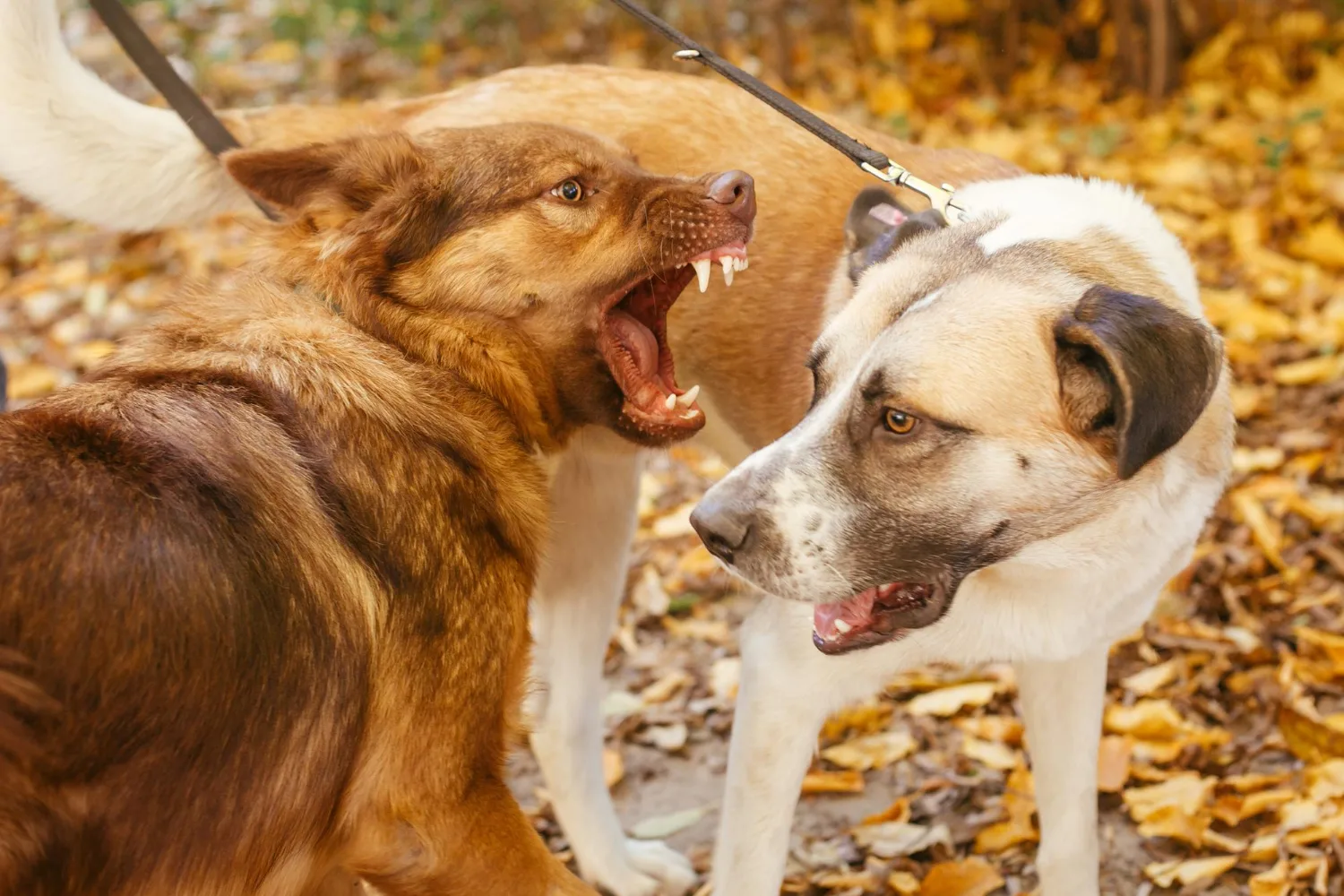
The dog that attacked him was a golden retriever.
When people hear about a dog attack, they often picture certain breeds. A golden retriever probably isn’t one of them.
But here’s the thing. Don’t assume that just because a dog looks friendly or is a golden retriever, it won’t attack.
I’ve seen dogs injured in fights involving all sorts of breeds, not just the ones people tend to be wary of.
I think golden retrievers are lovely dogs. I recommend them frequently. But I also think owners can become complacent with breeds that have a reputation for being gentle, particularly family dogs.
The reality is that any dog can react aggressively under the right circumstances. A history of friendly behaviour doesn’t make a dog incapable of biting.
That’s not a reason to be frightened of every dog you encounter. It’s a reason to pay attention and take appropriate precautions, regardless of the breed.
"Don't assume that because a dog looks friendly, or because it's a golden retriever, that it won't attack."
Dr Ari Ende
One situation I find particularly frustrating is when an off-leash dog runs up to another dog that’s walking on a lead.
The owner of the approaching dog calls out something along the lines of, “Don’t worry, he’s friendly!”
Well, that’s nice. But what about the other dog?
As I’ve said before, “Other people will have their dogs on that lead for a reason.”
That reason might be because their dog is anxious around other dogs. They might prefer their dog to interact only in a supervised environment. Or they might simply be following the rules.
Whatever the reason, they shouldn’t have to justify it to someone whose dog has come running over.
Some dogs become more defensive or reactive when they’re on a lead. They have less freedom to move away from an interaction they’re uncomfortable with.
Allowing your off-leash dog to approach them can lead to a confrontation neither dog needs.
Your dog’s friendliness doesn’t automatically mean the other dog wants to meet it.
And if your off-leash dog approaches a dog on a lead and that dog reacts, you need to recognise your own responsibility for allowing that encounter to happen.
With summer approaching, Sydney’s coastal parks and walking areas are becoming busier. Around places like Clovelly, you’ll find more dogs, families, picnics and people enjoying the outdoors.
There’s absolutely nothing wrong with letting dogs run around and enjoy themselves in places where it’s permitted. But owners need to remain attentive.
The single most important thing I would stress about off-leash walking is reliable recall.
Your dog needs to come back when you call it, even when something much more interesting is happening nearby.
If you cannot reliably call your dog away from another dog, then you need to keep it under closer control. That may mean keeping it on a lead while you continue working on its recall.
You also need to know where off-lead walking is permitted. Some Sydney parks have designated off-lead areas, while others only allow dogs off-lead at certain times.
Even in a designated off-lead area, you’re still responsible for controlling your dog.
We’ve covered several local options in our guide to dog parks in Sydney, although it’s important to check the current council rules and park signage before visiting.
“Even friendly play, or rumbles in the park, can quickly turn into fights.”
Dr Ari Ende
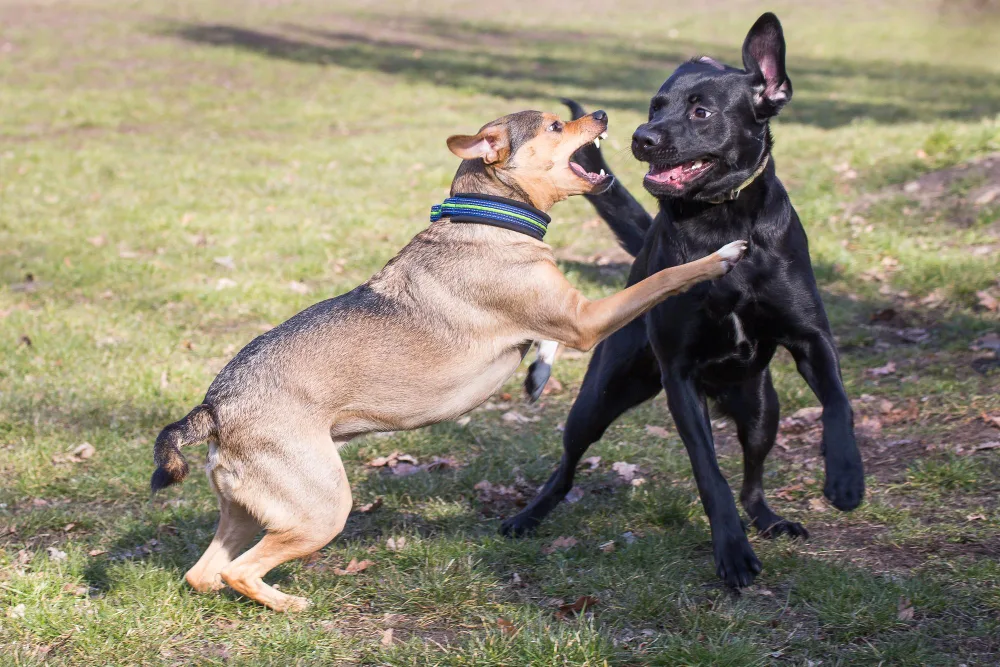
I’ve seen how quickly things can change when dogs are playing together.
One minute, they’re running around and having a great time. Next, something has upset one of them, and the interaction turns into a fight.
That doesn’t mean you should stop your dog from socialising. Appropriate socialisation and positive interactions with other dogs are important.
But you do need to consider the individual dogs involved, particularly differences in temperament, size and how comfortable they are with each other.
Watch what’s happening rather than assuming that because the dogs started playing nicely, they’ll continue that way.
If your dog is uncomfortable, another dog is becoming too rough, or the interaction is getting out of hand, call your dog away.
And if you think another dog is likely to harm yours, remove your dog from the situation if you can do so safely.
For owners of small dogs, picking them up may sometimes be necessary. However, be mindful that a larger dog may jump towards you, potentially putting you both at risk.
The aim isn’t to prevent every interaction. It’s to recognise when an interaction isn’t appropriate and do something about it before either dog gets hurt.
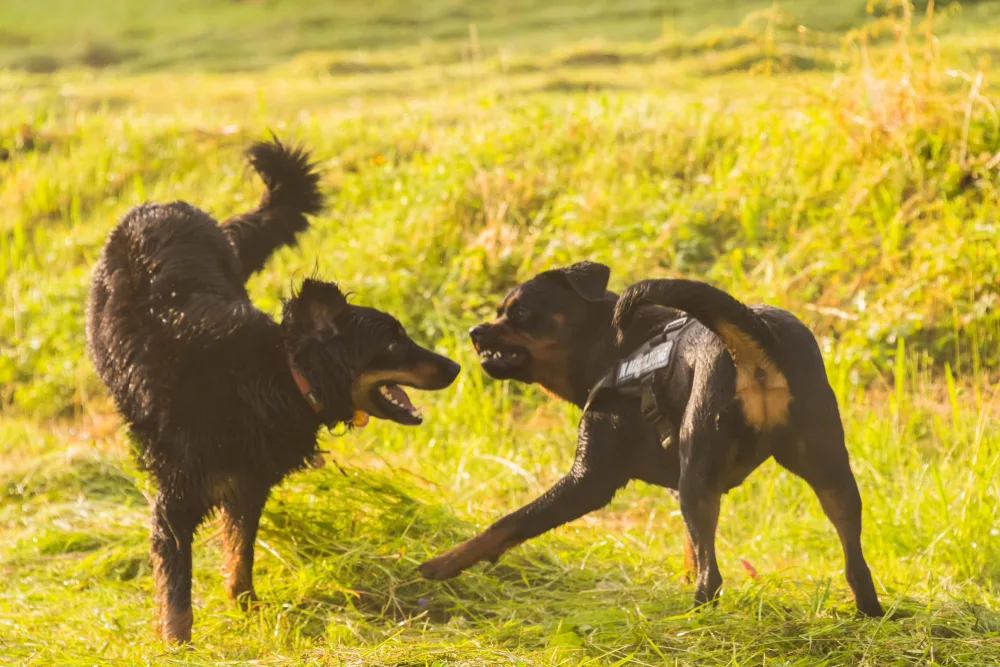
If there’s one thing I want owners to remember, it’s this: do not put your hands between two dogs that are fighting.
It’s understandable that your immediate reaction might be to jump in and separate them. But you can end up with a serious bite injury yourself, even from your own dog.
If there’s a way to interrupt the fight from a safe distance, such as using water or throwing a blanket over the dogs, it may help. Neither approach is guaranteed to work.
Avoid reaching for their collars or putting yourself between them. Once the dogs separate, keep them apart and prevent the confrontation from starting again.
It’s much better to recognise an uncomfortable interaction and intervene early than to find yourself trying to separate two dogs that are already fighting.
If your dog has been bitten, I recommend arranging a prompt veterinary assessment, even when the wound looks minor.
Some injuries become obvious immediately. Others are difficult to assess without examining the tissues beneath the skin.
Signs such as heavy bleeding, difficulty breathing, weakness, collapse, severe pain or difficulty walking warrant immediate emergency veterinary attention.
Depending on the injury, treatment might involve wound cleaning, pain relief, antibiotics, or surgical exploration. The right approach depends on what the examination reveals.
At VETaround, we can assess and manage many veterinary conditions in the home. But there are times when hospital facilities are necessary, and a serious bite injury is one of them.
With Axel, I didn’t want to risk treating an injury based solely on a photograph and a small opening in the skin. I recommended a hospital assessment because I knew there could be considerably more going on beneath the surface.
His case is a useful reminder of two things.
First, never judge the seriousness of a dog bite solely by how it looks.
And second, never assume that your dog, or another person’s dog, is incapable of causing harm.
A little more awareness and control in our parks could prevent an awful lot of injuries.
In-home care forms the foundation of how we treat and manage your pet’s health. Most conditions can be assessed, treated, and monitored in a familiar environment where pets are calmer and easier to handle. Available to residents of Sydney’s inner city, Inner West, Eastern Suburbs and the Lower North Shore.


First visit from Ari and Ellie and it went beyond all expectations. They were so genuinely interested in my two cats. Of course I couldn’t stop talking about them but they clearly were not bored. Did excellent health checks and vaccinations – was an absolute pleasure and I would totally recommend them to anybody. So fabulous having no stress of lugging…
Elle’s exceptionally professional, warm, and helpful phone manner, together with Dr Ari’s prompt arrival, gentle approach with Hudson, and clear, thorough medical explanations and recommendations, immediately put my mind at ease. The high level of care and professionalism demonstrated confirmed that contacting VETaround was the right decision.
Ari is the best vet ever. His home visits are incredible. Such a great service to not have to put your beloved pets in the stressful situation of a car. Or around sick pets in a waiting area. My cats LOVE HIM. Ollie my male cat NEVER comes out of hiding when visitors come over. With Ari, he not only came out, let him weigh him, have his check up done…
I was very pleased with the ladies from VETaround Mobile vet. Professional, polite and very knowledgeable. Certainly eased my mind about my cat 🐈 would recommend them to anyone needing good veterinary care for their pet. We all know just how important our four legged friends are!
Yes. Even a small puncture can conceal significant damage to the muscles and other tissues beneath the skin. A dog’s teeth can crush and tear tissue beyond the visible wound, as Axel’s case demonstrated when a 2 cm bite required a much larger surgical incision.
Your dog should receive prompt veterinary assessment after a bite, even if the wound looks minor. Heavy bleeding, difficulty breathing, severe pain, weakness or collapse require immediate emergency care. Some injuries are difficult to identify without examining the area more thoroughly.
A dog’s mouth contains bacteria that can enter the tissues when its teeth puncture the skin. The bite may also create pockets beneath the surface where bacteria can become trapped. Thorough cleaning and, where necessary, removal of damaged tissue help reduce the risk of infection.
A vet examines the wound and surrounding tissues to assess the extent of the injury. This may involve clipping the fur, cleaning the area and examining deeper tissues under sedation or anaesthesia. In cases like Axel’s, surgical exploration may be needed to identify damage that isn’t visible externally.
No. Treatment depends on the wound’s location, depth, contamination and the extent of tissue damage. Some wounds can be managed with cleaning and medication, while others require surgical exploration, removal of damaged tissue or closure. A veterinary examination helps determine which approach is appropriate.
A surgical drain allows fluid to escape from an area where it might otherwise accumulate beneath the skin. Vets may use drains when a bite has caused extensive tissue damage or created pockets within the wound. Axel needed a drain following surgery, with removal planned a few days later.
Watch for increasing swelling, discharge, pain or changes in your dog’s behaviour or mobility. These signs may indicate a complication that requires veterinary reassessment. Follow your vet’s instructions regarding medication, wound care and any scheduled appointments for drain or stitch removal.
Yes. Dogs that are generally friendly can still react aggressively in certain circumstances, including when they feel fearful, threatened or uncomfortable. Breed and previous behaviour alone cannot guarantee how a dog will react. Owners should supervise interactions and maintain effective control of their dogs, particularly in busy off-lead areas.


