
“Most pets show some degree of dental disease by the time they are examined at an annual check-up.”
Mon / Fri 7:30 am - 7 pm | Sat 9 am - 4 pm
Mon / Fri 7:30 am - 7 pm | Sat 9 am - 4 pm
Two questions for you… Why do we humans clean our teeth every day? And what would happen if we didn’t?
You only have to look a few years back into history to see what happens.
Bacteria build up on the teeth, the gums get sore and infected, and start to recede. Infection sets in deeper, teeth turn rotten and fall out, the breath stinks, and the pain is horrible.
And of course, the knock-on effect to overall health is also pretty serious… diarrhoea, kidney and heart disease are three examples. So I suggest you keep brushing and flossing.
And so to our pets. Has anyone tried to clean their cat or dog’s teeth? It’s tricky – I find only a handful of my patients will let their owners clean their teeth each day. So for the majority of pets, I can pretty much guarantee that when I examine them at their annual health check, I will find some degree of dental disease.
This ranges from the buildup of calculus to inflammation of the gums or more serious receding gums and abscesses. This is all part of periodontal disease. In some pets, this is clearly causing pain, and in advanced cases, I can see that the dental disease is making the cat or dog really very ill.
If your pet has minor dental disease – grade 1 or 2 – the changes are reversible. So, I recommend a regular dental scale and polish, often annually. This helps prevent progression to more severe dental disease and its consequences.
I’m a mobile vet, so I can either transport your pet to my hospital base or meet you there. This kind of scale and polish is a relatively short procedure – your pet will stay with us for the day only.
Pets with grade 3 or 4 dental disease have more serious problems, and it’s really important for them to get treatment since they are likely to be in pain. Patients with more severe dental problems also require regular dental care to keep the disease at bay and, as much as possible, slow its progression.
Obviously, I prefer to treat pets with grade 1 or 2 disease to stop the problem from getting to stage 3 or 4!
“Most pets show some degree of dental disease by the time they are examined at an annual check-up.”
My clients often tell me stories about when they were growing up, they had pets that never visited the vet or had any teeth cleaned, and they lived till they were 20!
I then ask them if their pets have bad breath… to which they always say, ‘Well, yes!’
I explain that these childhood pets probably didn’t have many, or any, teeth left because their teeth had become rotten and loose and fallen out, and that, along the way, their pets had probably had pain and discomfort. The blissful ignorance of the good old days…
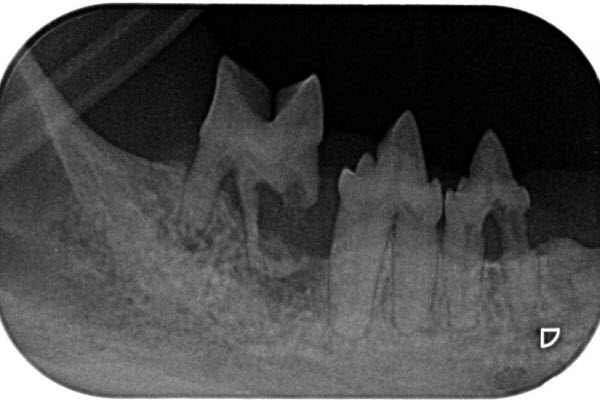
Lulu is a 3 yr old cat I saw for the first time for her annual health check and vaccines. When I touched her cheek, she jumped back and chattered her teeth, which told me she was in pain. When I opened her mouth, I could see her really swollen gums and smell her really bad breath!
I brought her back to our hospital base, and sadly, I had to remove all her back teeth because she had terribly advanced abscessation and periodontal disease. Her X-ray is the image you see on this page.
When I went to see her a few days later, she had NO pain, and did not chatter her teeth or mind me looking in her mouth. Her gums looked great, and her owner said she was happily eating anything she wanted! Although it would have been nice to save her teeth, in this case, Lulu is much better off without them and enjoys a life free of mouth pain.
“Treating dental disease early can prevent pain, tooth loss and more serious health complications.”
In-home care forms the foundation of how we treat and manage your pet’s health. Most conditions can be assessed, treated, and monitored in a familiar environment where pets are calmer and easier to handle. Available to residents of Sydney’s inner city, Inner West, Eastern Suburbs and the Lower North Shore.


First visit from Ari and Ellie and it went beyond all expectations. They were so genuinely interested in my two cats. Of course I couldn’t stop talking about them but they clearly were not bored. Did excellent health checks and vaccinations – was an absolute pleasure and I would totally recommend them to anybody. So fabulous having no stress of lugging…
Elle’s exceptionally professional, warm, and helpful phone manner, together with Dr Ari’s prompt arrival, gentle approach with Hudson, and clear, thorough medical explanations and recommendations, immediately put my mind at ease. The high level of care and professionalism demonstrated confirmed that contacting VETaround was the right decision.
Ari is the best vet ever. His home visits are incredible. Such a great service to not have to put your beloved pets in the stressful situation of a car. Or around sick pets in a waiting area. My cats LOVE HIM. Ollie my male cat NEVER comes out of hiding when visitors come over. With Ari, he not only came out, let him weigh him, have his check up done…
I was very pleased with the ladies from VETaround Mobile vet. Professional, polite and very knowledgeable. Certainly eased my mind about my cat 🐈 would recommend them to anyone needing good veterinary care for their pet. We all know just how important our four legged friends are!
Common signs include bad breath, swollen gums and sensitivity when the mouth is touched. Some pets may react when eating or when their faces are handled. These signs often indicate underlying periodontal disease.
Not all cases show obvious pain, but advanced dental disease can cause significant discomfort. Some pets may only show subtle signs, such as pulling away or reacting when their mouth is examined. Pain often becomes more noticeable as the disease progresses.
Early dental disease (grade 1 or 2) involves plaque build-up and mild gum inflammation and is often reversible. Advanced disease (grade 3 or 4) includes receding gums, infection and abscesses. At this stage, treatment is more complex and may involve tooth removal.
Early treatment can prevent progression to more serious stages that cause pain and illness. Once dental disease advances, it can affect overall health and require more invasive procedures. Managing it early helps maintain comfort and function.
A dental scale and polish is commonly used for early-stage disease and is typically a short procedure. Pets may stay for the day while the treatment is completed. More advanced cases may require additional procedures depending on severity.
Yes, as shown in the case of Lulu on this page, pets can recover well after treatment for advanced dental disease. Once painful teeth are removed and infection is treated, pets often return to normal eating and behaviour. In many cases, they are more comfortable than before treatment.


