
“Worm infections are common in dogs and cats, particularly in shared environments like parks and neighbourhood walks.”
Mon / Fri 7:30 am - 7 pm | Sat 9 am - 4 pm
Mon / Fri 7:30 am - 7 pm | Sat 9 am - 4 pm
Intestinal worms are common in dogs and cats and easily transferable in social environments such as neighbourhood walks or dog parks.
If you have trouble getting to the vet or have an anxious animal, VETaround’s at-home vet services can make worming very easy.
Our vet provides home consultations so they will come to you for comprehensive intestinal parasite prevention and treatment.

Worm eggs are generally shed in faeces. They are easily picked up by dogs and cats when they walk over or come into contact with the eggs or faeces on the ground, with infective larvae penetrating the skin.
Worms mostly infect their natural host, which is a dog or cat, but sometimes we see ‘zoonotic’ infections, meaning they have been transmitted to an ‘unnatural’ host, such as a human.
Children are most susceptible to infection. As such, it is very important to teach children to practise good hygiene when playing with pets or if there is the potential to come into contact with pet faeces.
“Worm infections are common in dogs and cats, particularly in shared environments like parks and neighbourhood walks.”
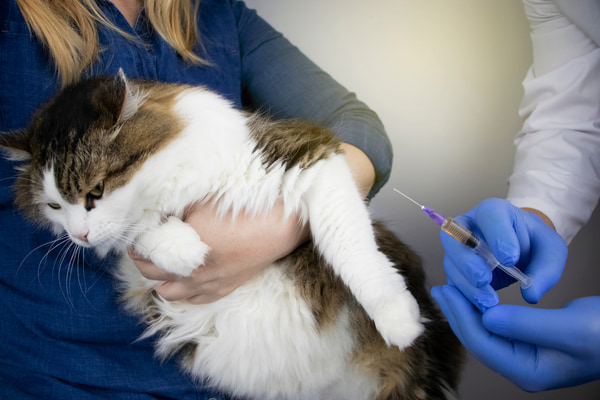
Dogs and cats require worming, either via tablets or chews, or in the form of drops placed onto the back of the animal’s neck.
At VETaround mobile vet, we recommend worming puppies and kittens every 2 weeks from birth to around 3 months of age, then monthly until 6 months of age. High-risk pets may subsequently require worming every three months.
The more social your pet is, the higher the risk of acquiring intestinal worms. That likelihood is significantly reduced for strictly indoor animals. Our house-call vet will be happy to chat with you about your pet’s situation and recommend the most suitable worming frequency.
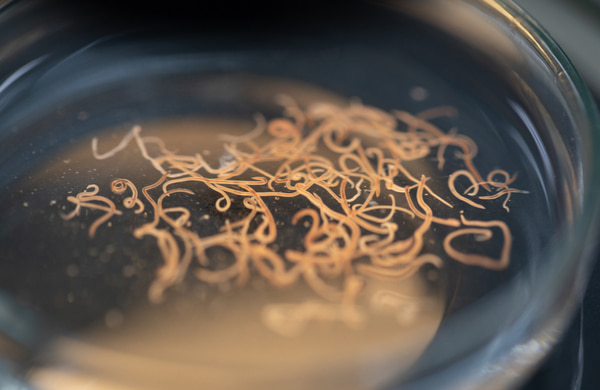
Roundworms are typically the largest worms, cylindrical and long. They live in your pet’s intestines. You may see these worms in the faeces or vomit of infected dogs or cats.
The most common clinical sign is diarrhoea or vomiting, but extreme cases can cause life-threatening intestinal obstruction. Roundworms also cause the serious zoonotic disease called ‘visceral larval migrans’, which mostly affects children.
The roundworm migrates throughout the child’s body, causing damage wherever it goes, and it often gravitates toward the eye, where it may cause blindness.
Roundworm prevention in pets is crucial.
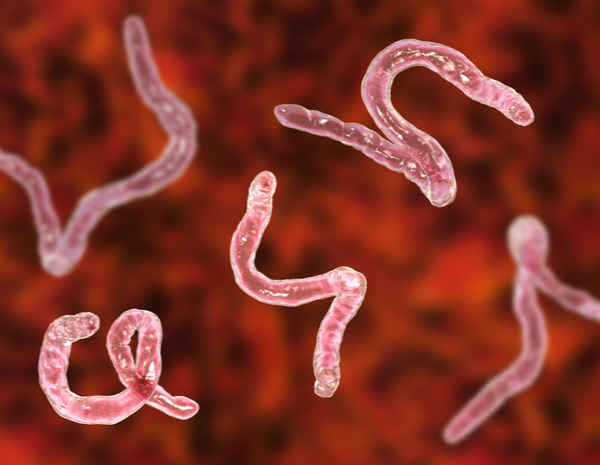
Hookworm infection of dogs and cats is generally acquired either orally (via the mouth) or through penetration of the larvae through the skin. The adults also live in the intestine but attach to the intestinal wall, feeding on blood.
The most important clinical signs of significant infection are weakness and anaemia, often requiring blood transfusions when severe.
Hookworm can also cause a zoonotic illness in people called ‘cutaneous larval migrans’, in which the larvae penetrate the skin and circulate beneath it, causing inflammation and other skin reactions.
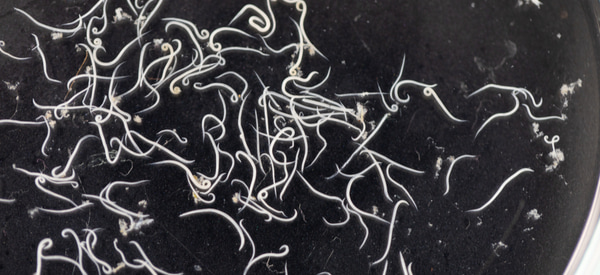
Whipworms live in the intestines, where they feed on blood. Whipworm infection can cause several different clinical signs in dogs, including bloody diarrhoea.
Dogs can become very sick, weak, and dehydrated, sometimes requiring extended hospital stays.
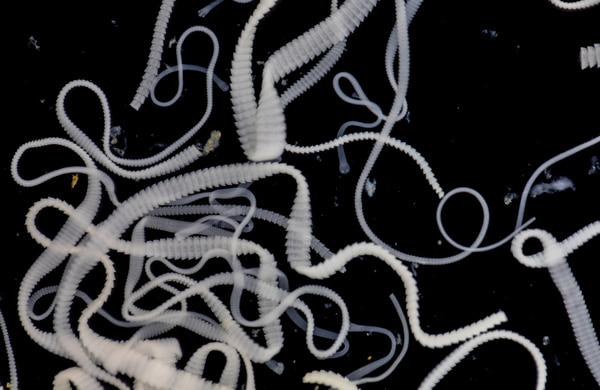
Common tapeworm infection in dogs occurs around the anus, causing irritation, itching, and, less commonly, mild diarrhoea. It is usually a small worm looking much like a grain of rice and is readily prevented with worming medication. As it is generally spread by fleas, good flea control is also important.
There is a more serious tapeworm called ‘hydatid’, which is common in rural areas but less prevalent in Sydney. As dogs are the natural host, they generally don’t show any signs of infection.
Humans can become seriously ill if they ingest tissue cysts from improperly cooked meat or if they come into contact with eggs spread by dogs or other animals. If you live in a high-risk area, good hygiene practices and proper meat cooking will help prevent infection.
Please contact us for comprehensive intestinal parasite prevention and treatment in the comfort of your own home.
In-home care forms the foundation of how we treat and manage your pet’s health. Most conditions can be assessed, treated, and monitored in a familiar environment where pets are calmer and easier to handle. Available to residents of Sydney’s inner city, Inner West, Eastern Suburbs and the Lower North Shore.


First visit from Ari and Ellie and it went beyond all expectations. They were so genuinely interested in my two cats. Of course I couldn’t stop talking about them but they clearly were not bored. Did excellent health checks and vaccinations – was an absolute pleasure and I would totally recommend them to anybody. So fabulous having no stress of lugging…
Elle’s exceptionally professional, warm, and helpful phone manner, together with Dr Ari’s prompt arrival, gentle approach with Hudson, and clear, thorough medical explanations and recommendations, immediately put my mind at ease. The high level of care and professionalism demonstrated confirmed that contacting VETaround was the right decision.
Ari is the best vet ever. His home visits are incredible. Such a great service to not have to put your beloved pets in the stressful situation of a car. Or around sick pets in a waiting area. My cats LOVE HIM. Ollie my male cat NEVER comes out of hiding when visitors come over. With Ari, he not only came out, let him weigh him, have his check up done…
I was very pleased with the ladies from VETaround Mobile vet. Professional, polite and very knowledgeable. Certainly eased my mind about my cat 🐈 would recommend them to anyone needing good veterinary care for their pet. We all know just how important our four legged friends are!
Worm eggs are shed in faeces and can contaminate the environment. Pets can pick them up through contact with soil, surfaces or infected material. Some larvae can also penetrate the skin.
They should be wormed every two weeks until around three months of age. After that, monthly treatment is recommended until six months. This schedule helps manage the higher risk during early development.
Indoor pets generally have a lower risk, but they are not completely risk-free. Exposure can still occur indirectly through the environment. Worming frequency can be adjusted based on lifestyle.
Some worms can be transmitted to humans, a phenomenon known as zoonotic infection. Children are more susceptible due to closer contact and poor hygiene habits. Preventative care and good hygiene reduce this risk.
Common signs include diarrhoea and vomiting. In more severe cases, pets may become weak or develop anaemia. Some worms may also be visible in faeces or vomit.
Certain tapeworms are spread by fleas. If flea control is not maintained, reinfection can occur even after worming. Managing both fleas and worms is part of effective parasite control.


